Noise
Can New Windows Cut the Traffic Noise in a Sunnyvale Home?
If your house sits near 101, Caltrain, or a flight path, new glass can make a real difference — but “soundproof” oversells it. How window noise control actually works, and where to spend.
If your Sunnyvale house sits anywhere near a freeway, an expressway, Caltrain, or a flight path, the question about new windows is often less about the energy bill and more about the noise. Homeowners want to know whether replacing the glass will finally quiet the room, and whether the word "soundproof" on a brochure is real or marketing. The honest answer is that the right windows make a genuine, measurable difference, and that "soundproof" oversells what any window can do.
What follows is how a window actually blocks sound, where Sunnyvale's noise comes from, what a replacement realistically changes, and when it is worth paying for laminated or acoustic glass instead of a standard upgrade. The goal is to set expectations you can hold a quote up against, not to promise silence.
Yes, New Windows Cut Noise — but "Soundproof" Oversells It
Replacing old, leaky windows with well-sealed modern ones reliably reduces the noise coming through them, often dramatically if what you have now is single-pane aluminum. What it does not do is make a room silent. Sound reaches you through walls, doors, vents and gaps as well as the glass, so the realistic goal is to take the windows off the list of weak points, not to erase the outside world.
Three physical things decide how much a window blocks sound: mass, the air space between panes, and how airtight the whole assembly is. A heavier or laminated pane, a wider gap, and a perimeter with no leaks all push noise down. A thin single pane in a loose, drafty frame fails on all three at once, which is why the windows in many older Sunnyvale homes are the loudest part of the wall.
Where Sunnyvale's Noise Actually Comes From
Sunnyvale is boxed in by traffic and transit. Highway 101, State Route 237, and Central Expressway carry heavy commute flows, Lawrence Expressway and the Mathilda and El Camino corridors add steady arterial noise, and Caltrain runs along the city's northern edge. Homes in the north and east of the city also sit under approach paths for San Jose Mineta International and nearby Moffett Field, so aircraft are part of the daily sound picture for many neighborhoods.
The common thread is low-frequency, continuous noise — tires, engines, rail and aircraft — which is exactly the kind that old single-pane windows pass most freely. Many of Sunnyvale's mid-century tract homes still carry their original aluminum-framed single-pane windows, which have almost no mass and rarely seal tightly anymore, so they let that drone straight through.
How a Window Blocks Sound
A window fights sound the same way a wall does: with mass and with separation. The glass itself is the mass, and thicker or laminated glass simply has more of it for sound to move. The sealed space between the two panes of an insulated glass unit adds separation, and the U.S. Department of Energy notes that this sealed gap is filled with an insulating gas such as argon; while that gap is there for heat, a wider space and panes of different thickness also disrupt sound as it tries to cross.
The industry rates this with a Sound Transmission Class, or STC, number — higher means more noise blocked — and you will see it on acoustic window spec sheets. You do not need to memorize the scale to use it; you just need to know that a standard dual-pane window carries a modest STC, and that laminated glass or dissimilar pane thicknesses are what push it meaningfully higher. Ask for the STC rating when noise is the reason you are buying.
What a Replacement Realistically Changes
The single biggest jump comes from simply leaving single-pane glass behind for a sealed, well-installed dual-pane unit. You add a second pane of mass, an insulating gap, and — just as important — a frame that actually seals. Gaps that leak air also leak sound, which is why the window's air-tightness matters as much as its glass. The National Fenestration Rating Council reports air leakage as a rated number on the NFRC label, where a lower figure means less air passes through, and a tight number there is a good proxy for a window that will not whistle traffic noise through its edges.
Beyond that first jump, the gains get more specialized. Going from a standard dual-pane to one with laminated glass, or to panes of two different thicknesses, targets sound specifically rather than heat. A wider air gap helps noise more than a third equal pane would, which is why acoustic packages are built differently from the triple-pane units sold mainly for cold climates. For most Sunnyvale homes the first upgrade does the heavy lifting and the acoustic glass is reserved for the worst-exposed rooms.
When Laminated or Acoustic Glass Is Worth It
Laminated glass bonds a thin plastic interlayer between two glass layers, and that interlayer damps vibration in a way a plain pane cannot, so it is the most effective single step for traffic and aircraft noise. It costs more than standard glass, which is why the smart move is to target it: put acoustic or laminated glass on the facade and the rooms that actually face the freeway, the expressway or the flight path, and keep a good standard dual-pane unit on the quiet side of the house.
The Install Decides Half the Result
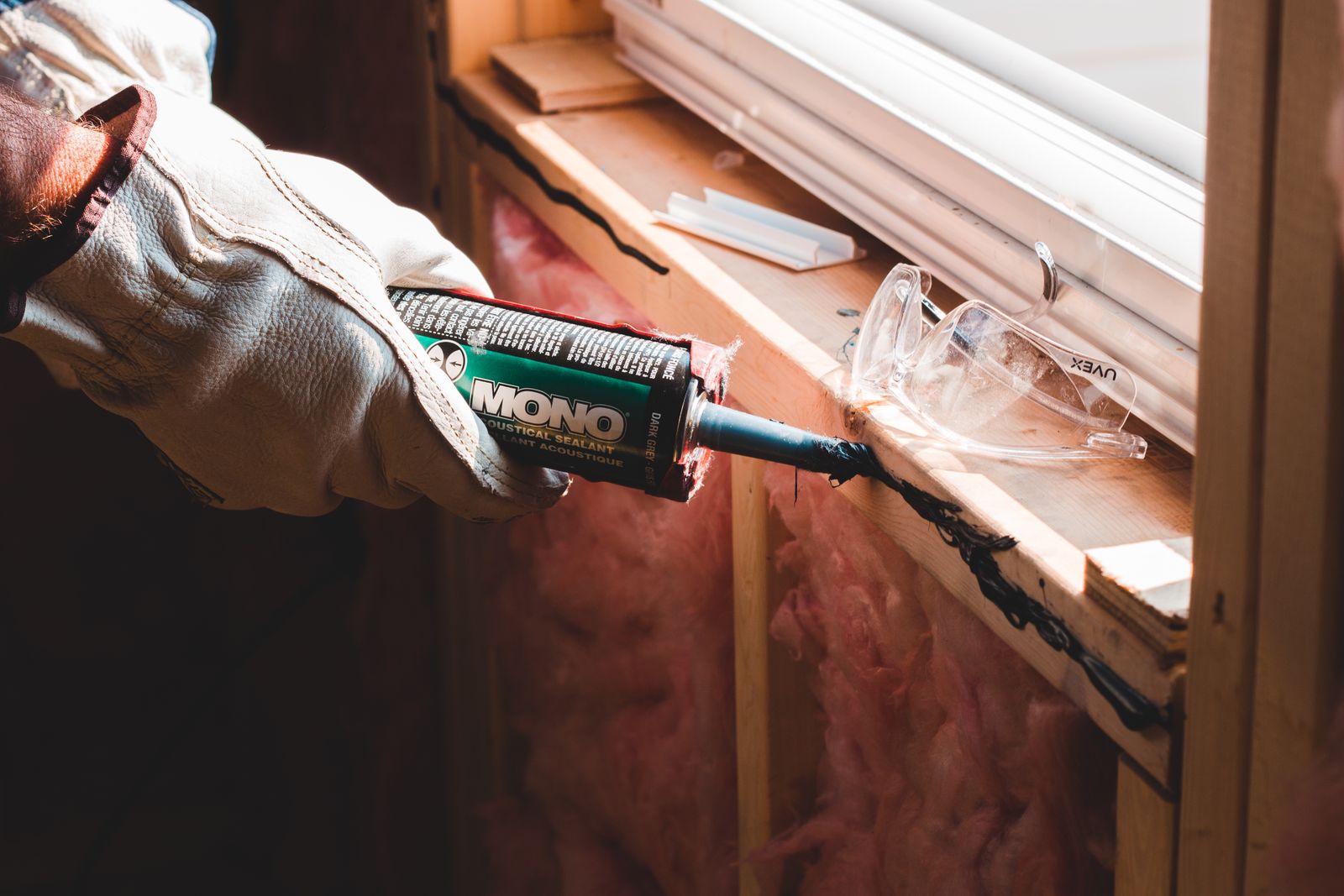
The best acoustic window underperforms if the opening around it is not sealed, because sound pours through the same gaps that let air and water in. The Department of Energy is explicit that even the most energy-efficient window must be properly installed to perform, and that is doubly true for noise: an unsealed perimeter is an open path for the exact low-frequency sound you are trying to stop. A careful installer packs and seals the gap between the frame and the rough opening rather than just foaming it and trimming over the top.
This is where the method matters. A well-executed full-frame window replacement lets the installer seal the full depth of the opening, which is the thorough answer when an old frame is leaking sound as well as air. A properly sealed energy-efficient window installation with the right glass is what turns a spec sheet's STC number into the quiet you actually paid for.
Deciding How Far to Take It in Your Home
Start by naming the problem rooms rather than the whole house. Stand in each room that bothers you, note which direction it faces, and match the glass to the exposure: laminated or acoustic glass on the walls that face the freeway, the expressway, Caltrain or the approach path, and a solid standard dual-pane everywhere else. Seal every window properly, because an airtight install is the part of the noise fight you get for free with good workmanship. Then deal with the other openings in those facing walls so the windows are not left doing a job the vents and doors are quietly undoing.
If you would rather have someone walk the house, work out which rooms justify acoustic glass and which do not, and give you honest numbers either way, that is what Sunnyvale Window Replacement does on every job. We can lay out the glass options and the install method room by room before anything is ordered, so you spend on quiet where it counts and not where it does not.
Not sure which rooms actually justify acoustic glass?
(408) 547-4680 — free in-home measureContact detailsFind Out Where Quiet Is Worth Paying For
We walk the house, work out which rooms face the worst of the traffic, rail and aircraft noise, and leave a written number for the glass and install each opening actually needs.
(408) 547-4680 — book your free measure